Fastest Trains in the World: Speed Records & Comparisons
বিশ্বের দ্রুততম ট্রেন: গতির রেকর্ড ও তুলনা
Guide
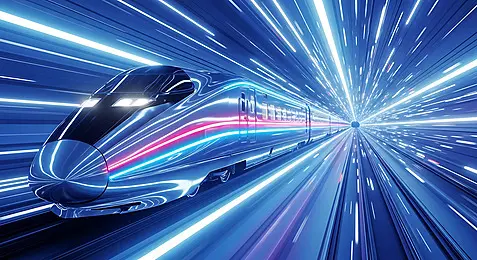
The race for the fastest train in the world has driven remarkable engineering achievements over the past six decades. Since Japan launched the first Shinkansen at 210 km/h in 1964, train speeds have more than tripled, with maglev (magnetic levitation) technology pushing beyond 600 km/h in testing. Here is the definitive guide to the world's fastest trains.
In regular commercial service, China's CR400AF Fuxing holds the crown, operating at 350 km/h on the Beijing-Shanghai and Beijing-Guangzhou lines. This makes it the fastest train on a regularly scheduled service anywhere in the world. Close behind are Japan's E5 and E6 series Shinkansen (320 km/h), France's TGV Duplex (320 km/h), China's CRH380A (300 km/h), and Spain's AVE S-103 (310 km/h). Germany's ICE 3 operates at 300 km/h, while South Korea's KTX reaches 305 km/h.
Test speed records tell an even more impressive story. Japan's L0 Series maglev achieved a breathtaking 603 km/h in 2015 during testing for the upcoming Chuo Shinkansen line (Tokyo-Nagoya, expected 2027+). France's TGV holds the conventional rail speed record at 574.8 km/h, set in 2007 with a modified TGV POS train. China's CRRC 600 maglev prototype has demonstrated speeds of 600 km/h, and the Shanghai Maglev (currently the world's fastest commercial maglev) operates at 430 km/h on the airport-city shuttle.
The future of ultra-high-speed rail includes Japan's Chuo Shinkansen maglev (planned 500 km/h commercial service), Hyperloop concepts (theoretical 1,000+ km/h in a vacuum tube), and next-generation conventional high-speed trains from China, Europe, and Japan targeting 400+ km/h. As these technologies mature, the boundaries of rail speed will continue to be pushed, potentially rivaling short-haul aviation for speed while maintaining rail's environmental advantages.
বাংলায় পড়ুন
বিশ্বের দ্রুততম ট্রেনের দৌড়ে চীনের CR400AF ফুক্সিং ঘণ্টায় ৩৫০ কিমি গতিতে নিয়মিত বাণিজ্যিক সেবায় শীর্ষে। জাপানের শিনকানসেন ৩২০ কিমি/ঘ, ফ্রান্সের TGV ৩২০ কিমি/ঘ এবং স্পেনের AVE ৩১০ কিমি/ঘ গতিতে চলে।
পরীক্ষামূলক গতিতে জাপানের L0 সিরিজ ম্যাগলেভ ২০১৫ সালে ৬০৩ কিমি/ঘ অর্জন করেছে। ফ্রান্সের TGV ২০০৭ সালে ৫৭৪.৮ কিমি/ঘ প্রচলিত রেলের রেকর্ড গড়েছে। ভবিষ্যতে জাপানের চুও শিনকানসেন ম্যাগলেভ ৫০০ কিমি/ঘ বাণিজ্যিক সেবা দেবে বলে আশা করা হচ্ছে।
Top Tips
- China's Fuxing at 350 km/h is the fastest regularly scheduled train — ride the Beijing-Shanghai route
- Japan's Shinkansen is the best overall high-speed experience combining speed, punctuality, and comfort
- France's TGV holds the conventional rail speed record at 574.8 km/h
- The Shanghai Maglev (430 km/h) is the fastest commercial maglev — take it from Pudong Airport
- Book Shinkansen or TGV experiences to feel world-class speed firsthand
- Hyperloop and next-gen maglev could redefine rail speed in the coming decades
Frequently Asked Questions
What is the fastest train in the world?
In regular commercial service, China's CR400AF Fuxing at 350 km/h is the fastest. The absolute speed record is held by Japan's L0 Series maglev at 603 km/h (test run in 2015). The fastest commercial maglev is the Shanghai Maglev at 430 km/h.
How fast is the Japanese bullet train?
Japan's Shinkansen operates at up to 320 km/h on the Tohoku line (E5/E6 series). The most famous route, Tokyo-Osaka on the Tokaido Shinkansen, runs at 285 km/h. The upcoming Chuo Shinkansen maglev will operate at 500 km/h.
Will trains ever be faster than planes?
For short-to-medium distances (under 800 km), some high-speed trains are already faster than flying when you include airport procedures. Maglev and Hyperloop technologies at 500-1,000+ km/h could eventually match flight speeds for domestic routes.